More than half of Medicare patients diagnosed with sleep apnea are not on therapy.
Ira finds these patients, starts or restarts their therapy, and keeps them on it, through month 12 and beyond.
See what Ira doesTogether, 71 of every 100 diagnosed patients are not adherent to therapy within two years.
After day 90, no one is held accountable
No single owner
The visit, the study and the device are often handled separately. No one owns the whole path.
No one is paid for the outcome
Each is paid for its own piece. No one is paid for getting the patient onto therapy and keeping them there.
The check stops at day 90
Medicare requires proof of adherence only in the first 90 days. After that, no one has to show the patient is still on therapy.
Medicare already pays for the visit, the sleep study and the device. The benefit only arrives if the patient stays on therapy.
Why Ira starts with Medicare
Savings per patient, per year
When a Medicare patient with sleep apnea gets onto therapy
Net of the cost of therapy. On therapy means the patient met Medicare's 90-day adherence threshold.
More common
About 1 in 5 people over 65 have moderate-to-severe sleep apnea, against fewer than 1 in 10 at ages 30 to 49.
Sicker patients
Nearly half of Medicare patients with sleep apnea have stroke, heart failure or COPD, about three times the share in a commercial population.
The sickest are the least likely to be treated
Medicare patients with these conditions start therapy less often and stay on it less.
The same approach applies to commercial patients and to people under 65. Ira starts where it can do the most for patients' health and for the cost of their care.
What Ira does
Ira is a sleep apnea identification-and-adherence program, delivered as a care provider. It answers each point where sleep care loses patients today.
Find
Sleep care waits for a referral.
Ira finds patients in a plan's or ACO's own claims, diagnosed or undiagnosed. We have found no one in sleep care who does this today.
Route
Long waits to see a specialist before anyone decides which test or visit a patient needs.
Live at CSCC: Ira's intake picks a home test or in-lab study by payer rules, and a sleep physician confirms. With a plan or ACO, restarting patients will go to a telehealth consult or an AI-assisted mask refit.
Start
After setup by a durable medical equipment supplier, mask leak and pressure issues often go unnoticed.
Nightly PAP device data flags mask and pressure issues early, so a call, a mask refit or a follow-up visit can happen before day 90.
Follow up
Follow-up runs on a fixed schedule, not when a patient starts slipping.
Drops in adherence trigger outreach, and patients who keep slipping are escalated to a sleep physician for a follow-up visit. Outreach begins Q4 2026. From Q1 2027, a risk score for each patient decides who is contacted first.
Stay
Accountability ends at the 90-day compliance window.
Ira proposes that part of its fee be contingent on patient adherence at day 90, month 6 and month 12.

Ira is live at Comprehensive Sleep Care Center (CSCC), its first site. Ira is pre-revenue and has no payer contract yet.
The technology under the program
Two tools do the work. All screens show synthetic patients.
Intake: recommends the next step
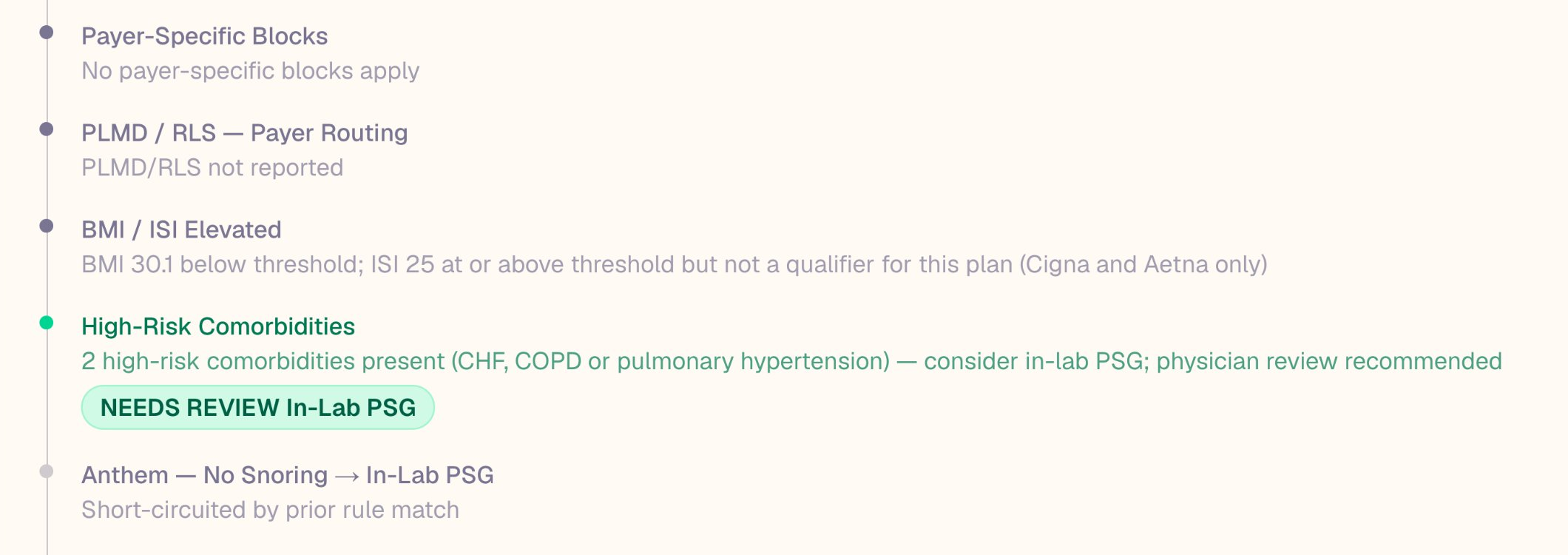
A synthetic patient: 72, Medicare Advantage, heart failure and COPD. The rule that fired is highlighted. Heart failure and COPD lead to an in-lab study, with physician review.
A risk model predicts drop-off from a patient's first 14 nights, tested on held-out patients. It will be applied from Q1 2027.
Ira Health, LLC owns the software and models. CSCC owns its patient data.
Adherence: shows why a patient is slipping
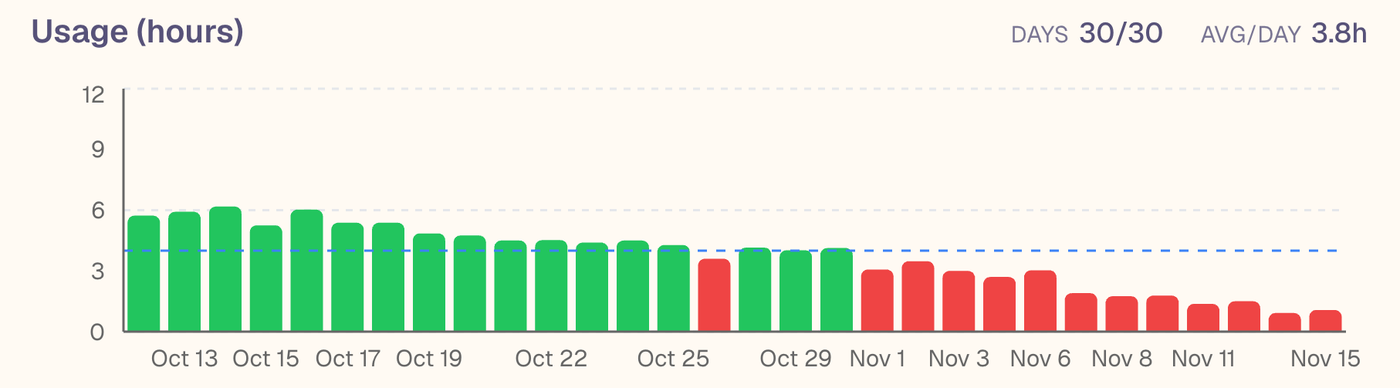
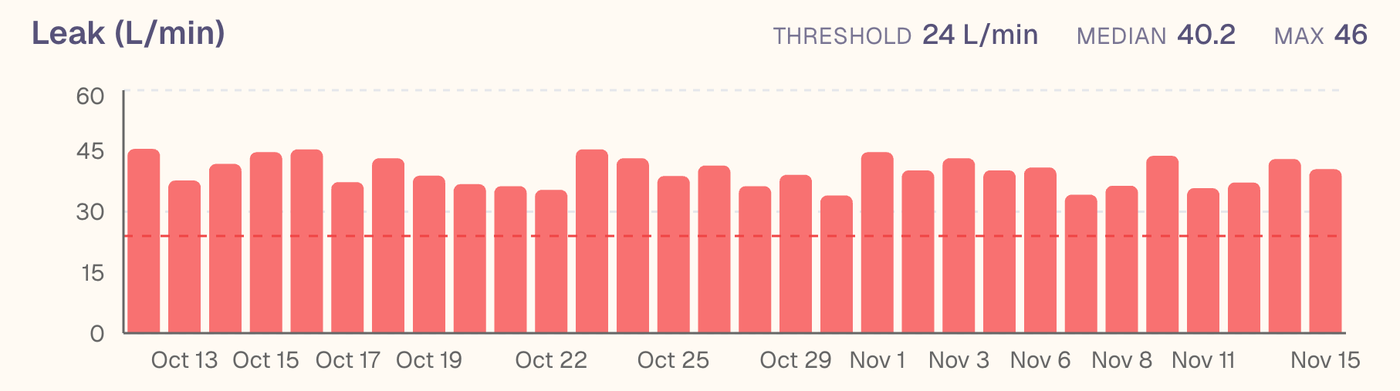
A staff member asks Ira's assistant:

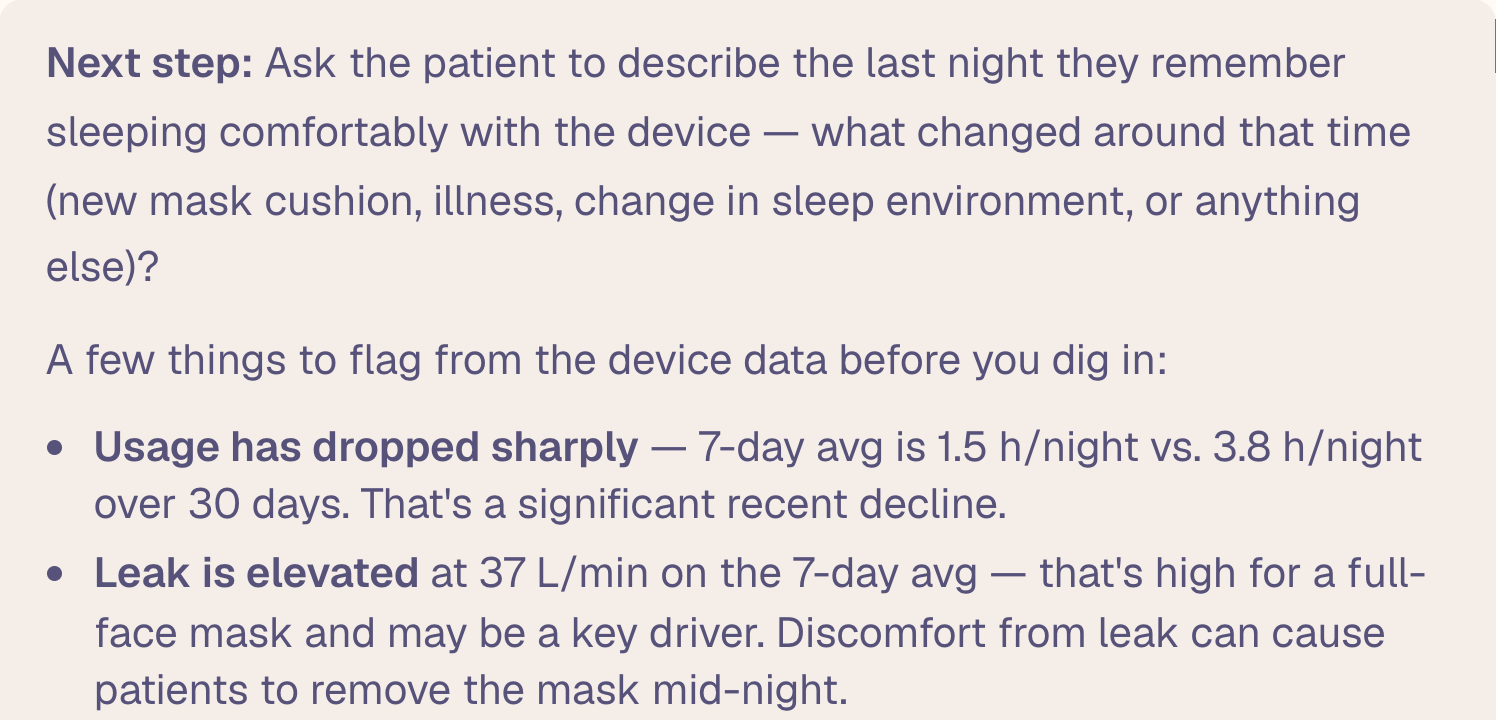
A second synthetic patient passed Medicare's adherence check in her first month, but her mask leak was already high. Ira shows the leak while adherence is still strong: the cue for a mask refit before adherence drops.
The opportunity
Of every 100,000 people on Medicare
a year in savings if every one of those 7,442 patients were treated.
Across all of Medicare
Yearly savings if every untreated sleep apnea patient were treated.
Stroke, heart failure or COPD, among 44.6M people in Medicare Advantage plans and ACOs.
The part Ira is built for
Any chronic condition, among all 63.6M people on Medicare.
People aged 65 and older. A ceiling, not a forecast.
How Ira gets there
Prove it with one practice's own patients, then one region, then more.
CSCC's own Medicare patients who own a device and are non-adherent.
Intake and device data review, then a mask refit and/or follow-up visits.
- Q4 2026Outreach begins at CSCC
- Q1 2027Restarts and risk scoring begin
- H1 2027First results against baseline
A first Medicare Advantage plan or regional ACO in Virginia and Maryland.
Add patients who never started or need a new study. First shared savings contract.
- H2 2027A plan or ACO agrees to a pilot
- H1 2028Pilot patients enrolled
More plans and ACOs in new regions.
Add undiagnosed patients found in claims. Contracted partner labs beyond CSCC.
- AfterNew regions, partner labs
How patients are found. The plan or ACO runs a claims query that Ira specifies. Dates are targets.
Who Ira works with
The organizations that gain when a Medicare patient stays out of the hospital.
Medicare Advantage plans
Carry the full cost of care for their patients.
Regional ACOs
Share in the savings when their Traditional Medicare patients cost less.
How Ira is paid
Care delivered
Consults, follow-up visits and home sleep tests, billed as claims by Ira Health.
Program fee
A monthly fee for each patient Ira engages. Part is withheld until the patient is adherent at day 90, month 6 and month 12. No remote patient monitoring is billed.
Shared savings
Medicare already pays ACOs a share of what they save, and CMS aims to have every Traditional Medicare patient in accountable care by 2030. Ira's fee becomes a share of the savings it produces.
Shared savings already exists in Medicare. Ira earns its share by keeping sleep apnea patients on therapy.
Leadership team
A founder inside CSCC and the engineers who build Ira.

Head of AI & Innovation at CSCC. Built Ira on data from 100,000+ patients started on PAP; live since May 2026. UPenn, Biomedical Sciences 2027.

Partner and COO at Bit Complete. Leads the team that builds Ira.

Medical Director at CSCC and a sleep physician. Uses Ira in clinic with his patients.

Physician and entrepreneur. Co-founded Velano Vascular (acquired by BD). Healthcare angel investor with Robin Hood Ventures.

Talk to Ira
Ira is looking for a first Medicare Advantage plan or regional ACO in Virginia and Maryland. If you lead medical management, quality or population health at one, we would like to hear from you.
msabharwal@irasleep.com